Does mineral sunscreen really protect sensitive skin better, or is chemical SPF just as safe? For reactive, rosacea-prone, or easily stinging skin, mineral sunscreen is the better starting point. Choose a fragrance-free formula with zinc oxide or titanium dioxide, broad-spectrum protection, SPF 30 or higher, and water resistance when you need it.
Mineral Sunscreen Wins for Reactive Skin
The quick comparison
| Feature | Mineral sunscreen | Chemical sunscreen |
|---|---|---|
| Main filters | Zinc oxide and titanium dioxide | Avobenzone, octocrylene, octisalate, octinoxate, or newer filters |
| Best starting point for sensitive skin | Yes, especially for rosacea or burning | Not usually the first choice when SPF stings |
| White cast risk | Higher in untinted formulas | Usually low or invisible |
| Texture | Can feel thicker or chalkier | Often lighter and easier under makeup |
| Minimum target | Broad spectrum, SPF 30+ | Broad spectrum, SPF 30+ |
The winner for skin that burns, flushes, or reacts to sunscreen is mineral SPF. Dermatologists commonly suggest zinc oxide or titanium dioxide for sensitive and rosacea-prone skin because these filters tend to cause less stinging. The American Academy of Dermatology sunscreen-label guidance also points shoppers toward fragrance-free products and these two mineral filters.
What this verdict does not mean
It does not mean every mineral formula is gentle or every chemical formula is harmful. Fragrance, essential oils, preservatives, alcohol, and a drying base can irritate skin in either category. A badly formulated zinc sunscreen can leave skin tight and flaky. A well-made chemical sunscreen may feel comfortable all day. Still, if you need the safest first experiment, pick mineral.
How Mineral and Chemical Filters Actually Work

Mineral filters are not just tiny mirrors
Zinc oxide and titanium dioxide form a film across the skin. They absorb much of the incoming ultraviolet radiation and also scatter some light at the surface. Zinc oxide offers broad protection across UVA and UVB wavelengths, while titanium dioxide is especially useful for UVB and shorter UVA wavelengths. A formula that combines both can provide strong coverage without relying on chemical filters.
The filter is only one part of the product. The lotion, cream, or stick must spread evenly to create a continuous layer. A sunscreen with excellent active ingredients will still fail if you apply a thin stripe to one cheek, rub it away with a towel, or skip the ears and hairline.
Chemical filters absorb UV inside the sunscreen film
Chemical filters absorb ultraviolet energy and convert it into a small amount of heat before the energy can damage skin cells. Modern formulas often combine several filters because each filter covers a different part of the UVA or UVB range. This helps create a light texture with little visible residue.
The word chemical does not automatically mean unsafe. Zinc oxide and titanium dioxide are chemicals too. The practical difference is the filter system and the rest of the formula. The FDA sunscreen guidance explains that SPF mainly reflects UVB protection, while broad-spectrum labeling adds UVA protection. That is why SPF 50 alone is not enough information. Look for broad spectrum as well.
Five Checks That Matter More Than the Word Sensitive
Read the label in this order
- Check the active ingredients. For the gentlest first trial, choose zinc oxide, titanium dioxide, or both. If your skin reacts to chemical filters, this step matters more than a soft marketing claim.
- Confirm broad-spectrum protection. SPF measures mainly UVB resistance. Broad spectrum means the product also protects against UVA, the radiation linked to long-term photoaging and pigment changes.
- Choose SPF 30 or higher. SPF 30 blocks about 97 percent of UVB when applied correctly. SPF 50 gives a little more margin for missed spots, but it does not let you apply less product.
- Reject fragrance and essential oils. Lavender, citrus oils, peppermint, and perfume blends can cause burning or redness. Unscented is not always the same as fragrance-free.
- Match the finish to your real routine. A tinted mineral lotion is smarter than a white formula you will avoid. A light chemical lotion may be the better daily choice if thick creams make you skip SPF.
Patch-test the finished formula
Apply a small amount behind one ear or along the jaw for three days. Watch for delayed itching, bumps, tightness, or flushing. Then test it on one side of the face before applying it everywhere. Patch testing cannot predict every allergy, but it catches many obvious problems without forcing your whole face to recover.
The Best Mineral SPF Picks for Sensitive Skin

For redness and visible tone changes
La Roche-Posay Anthelios Mineral Tinted Sunscreen SPF 50 is the strongest pick when white cast is your main reason for avoiding mineral SPF. It uses a tinted finish and comes in several shade options, including Tinted, Medium, Medium-Deep, and Deep. The official listed price is about $39.99. The tint also makes it more useful for people dealing with dark spots because iron oxides can add protection against some visible light.
For very dry or easily irritated skin, CeraVe Hydrating Mineral Sunscreen SPF 50 is the better budget choice. Its cream texture suits dry skin more than a watery gel, and the familiar barrier-support ingredients make it a practical daytime layer. The tradeoff is a stronger chance of cast and a heavier feel. Pick CeraVe when comfort and moisture matter more than an invisible finish.
For a lighter mineral texture
EltaMD UV Physical Broad-Spectrum SPF 41 is the clear choice for people who want a lighter, tinted mineral formula and do not need SPF 50. It uses zinc oxide and titanium dioxide and works well as a makeup base for many users. The lower SPF is not a deal breaker for ordinary daily exposure, but I would choose SPF 50 for long outdoor periods.
Do not buy an untinted mineral sunscreen solely because the word gentle appears on the front. If the product leaves a gray cast, pills under moisturizer, or flakes around the nose, you will use too little. For sensitive skin, the best mineral SPF is the one that stays comfortable and gets applied in a full, even layer.
When Chemical Sunscreen Is the Smarter Choice
Is chemical SPF wrong for sensitive skin?
No. Chemical sunscreen is a reasonable choice when mineral formulas sting, crack, pill, or leave an obvious cast that makes consistent use impossible. The winning formula should still be fragrance-free, broad spectrum, SPF 30 or higher, and tested on your own skin before daily use. Sensitivity is personal. A filter that bothers one person may be comfortable for another.
Which lighter formulas deserve a look?
Beauty of Joseon Relief Sun: Rice + Probiotics SPF 50+ is popular with dry and combination skin because its cream texture feels more like skincare than beach sunscreen. It is a chemical-filter formula, so skip it if chemical SPF reliably causes burning around your eyes. Isntree Hyaluronic Acid Watery Sun Gel SPF 50+ is the better pick for people who hate heavy layers and want a lighter, hydrating finish. Both products are widely sold outside the United States, and formulas can vary by market, so check the current active-ingredient panel.
Buy chemical sunscreen when texture is the barrier stopping you from wearing SPF. Do not buy it to chase a trendy finish if every chemical formula makes your face flush. In that case, a tinted mineral product is the smarter trade.
How to Apply SPF Without Starting a Flare

A simple morning method
- Wash with a gentle, fragrance-free cleanser or rinse with lukewarm water.
- Apply moisturizer first if your skin feels tight. Let it settle for five to ten minutes.
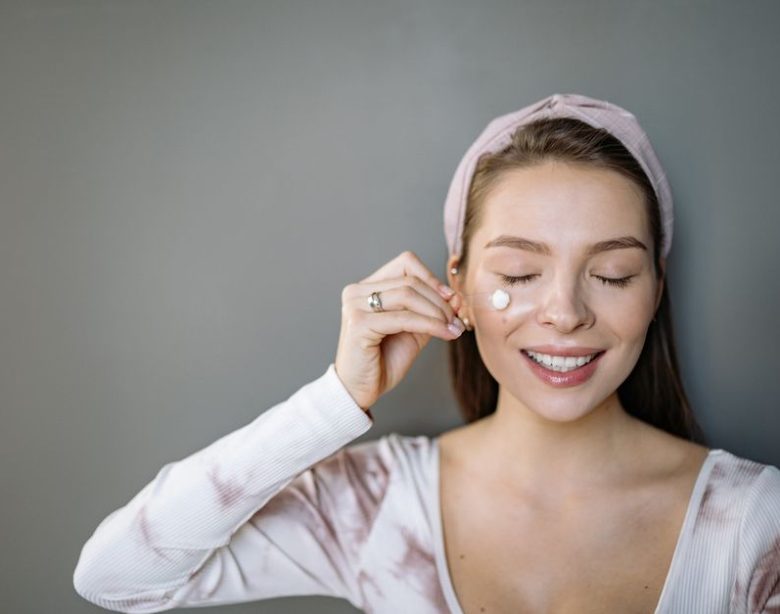
- Use enough sunscreen for the exposed face, ears, and neck. A two-finger amount is a useful face-and-neck estimate, though face size varies.
- Spread the sunscreen in two thin passes instead of forcing one thick layer across dry patches.
- Give it about fifteen minutes before strong outdoor exposure. Add a hat and shade when sunlight is intense.
- Reapply after swimming, heavy sweating, towel drying, or extended outdoor time. Water resistance does not mean all-day protection.
The mistakes that cause most failures
Rubbing too hard can leave irritated skin red before the sunscreen has a chance to work. Applying SPF only to the center of the face misses the temples, eyelids, ears, and neck. Mixing sunscreen into foundation reduces the tested protection because the final amount becomes unpredictable. Layer the products instead.
Stop using a sunscreen that causes swelling, hives, intense itching, or persistent burning. Seek medical advice for a strong reaction or repeated flares. For everyone else, the clearest answer remains simple: sensitive skin should start with fragrance-free mineral SPF 30 or higher, then move to chemical sunscreen only when its texture solves a real wearing problem.