Most rosacea advice starts with the wrong question. People ask “What product fixes redness?” when they should ask “What product is making this worse?” The answer is usually the one you’re already using.
I spent two years trying to fix my rosacea by adding things. More serums. More actives. More “soothing” masks that cost $60. My face got redder. Then I stripped everything back, rebuilt the routine around three specific ingredients, and saw more improvement in 21 days than in the previous 24 months.
This is the exact routine. No fluff. No $200 miracle creams. Just what worked, what didn’t, and the mistakes that kept my skin stuck in a flare cycle.
The Ingredient Mistake That Keeps Rosacea Flaring
Here’s the thing nobody tells you: rosacea skin doesn’t need more ingredients. It needs fewer. Every additional product is another chance for a reaction.
The skincare industry profits from making you feel like you need a 10-step routine. You don’t. You need three things: a cleanser that doesn’t strip your barrier, a moisturizer that repairs it, and one active ingredient that actually treats the underlying inflammation.
What you need to remove first:
- Fragrance — including “natural” fragrance like lavender oil, citrus oils, and eucalyptus. These are irritants, not treatments.
- Essential oils — same category, worse marketing. “Calming lavender oil” is still an irritant to rosacea-prone skin.
- Physical scrubs — the St. Ives Apricot Scrub generation destroyed more skin barriers than any product in history.
- Alcohol denat — found in toners and gel moisturizers. It evaporates fast and feels “clean” but strips your barrier.
- Witch hazel — another “natural” astringent that triggers flushing in rosacea-prone skin.
If your current routine has any of these, remove them before adding anything new. This step alone reduced my baseline redness by about 30% in the first week.
What Actually Calms Rosacea Skin
Three ingredients have real clinical backing for rosacea:
- Azelaic acid — the gold standard. It reduces inflammation, kills the bacteria associated with rosacea papules, and gently exfoliates. Studies show 15% azelaic acid gel matches metronidazole for papulopustular rosacea, often with faster visible results.
- Niacinamide — 2-5% concentration. It strengthens the skin barrier, reduces redness, and regulates oil production. Above 5% and it can actually trigger flushing in some people. More is not better.
- Ceramides — the mortar between your skin cells. Rosacea-prone skin has a weaker barrier, which means more water loss, more irritant penetration, more redness. Ceramide-rich moisturizers fix this.
That’s it. That’s the ingredient list. Everything else is optional, and most “rosacea-targeted” products are just overpriced moisturizers with a pink label.
My Exact 3-Week Routine, Step by Step
I’m going to name specific products and prices because “use a gentle cleanser” is useless advice. You need to know exactly what to buy and why.
Morning (2 steps, under 3 minutes)
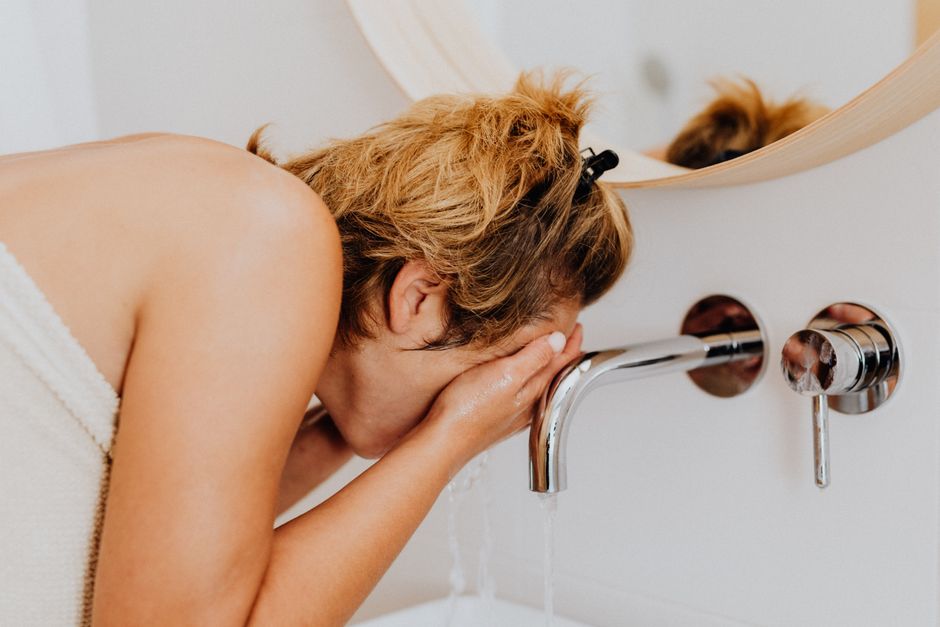
- Splash with lukewarm water only. No cleanser. If you cleansed properly the night before, your skin doesn’t need it in the morning. Hot water triggers flushing. Cold water shocks the capillaries. Lukewarm is the entire game.
- Apply a ceramide moisturizer to damp skin. I use CeraVe PM Facial Moisturizing Lotion ($13 for 3 oz). It has ceramides, niacinamide, and zero fragrance. Some people find it stings on broken skin — if that’s you, switch to Vanicream Daily Facial Moisturizer ($12 for 3 oz), which is even more minimal.
- Sunscreen, always. UV exposure is a major rosacea trigger. I use La Roche-Posay Anthelios Mineral SPF 50 ($37 for 1.7 oz). Chemical filters can sting rosacea skin; mineral filters (zinc oxide, titanium dioxide) sit on top and actually calm inflammation. Yes, it’s more expensive. Yes, it’s worth it.
Evening (3 steps, under 5 minutes)
- Cleanse with a non-foaming, fragrance-free cleanser. Foaming cleansers use surfactants that strip your barrier. I use La Roche-Posay Toleriane Hydrating Gentle Cleanser ($16 for 13.5 oz). It’s a cream cleanser that removes sunscreen without leaving your face feeling tight. If you need a drugstore alternative, Cetaphil Gentle Skin Cleanser ($11 for 16 oz) works but doesn’t remove mineral sunscreen as well — you’d need a double cleanse.
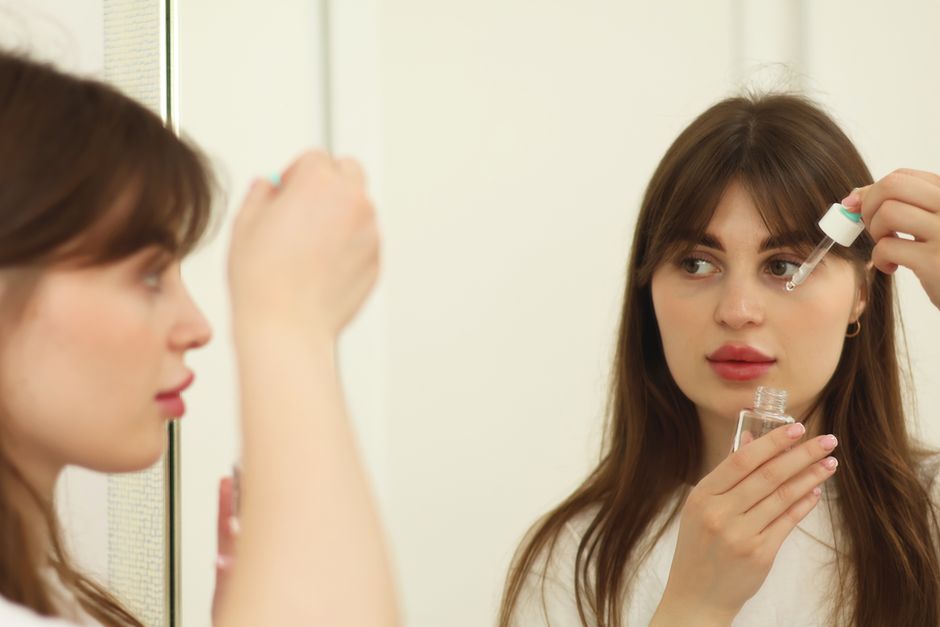
- Apply azelaic acid. I started with The Ordinary Azelaic Acid Suspension 10% ($12 for 1 oz). It’s affordable and effective, but the silicone texture pills if you rub it. Pat it on, don’t rub. If you want a more elegant formula, Paula’s Choice 10% Azelaic Acid Booster ($39 for 1 oz) has a cream-gel texture that layers better under moisturizer.
- Wait 5 minutes, then apply the same ceramide moisturizer. The wait time lets the azelaic acid absorb before you seal it in. Skipping the wait time isn’t a disaster, but it dilutes the active.
That’s the entire routine. Five products total. Three steps in the morning, three at night. My skin went from red and stinging to calm and even in 21 days.
The 3-Week Timeline: What Actually Happened
| Week | What I Noticed | What I Did Differently |
|---|---|---|
| Week 1 | Redness reduced by ~30%. Skin stopped stinging when I applied moisturizer. The constant tight feeling disappeared. | Removed all fragrance, essential oils, and actives. Basic cleanse + moisturize + SPF only. No azelaic acid yet. |
| Week 2 | Introduced azelaic acid every other night. Mild tingling on first application, gone by day 3. Papules started flattening. Redness down ~50% from baseline. | Added The Ordinary Azelaic Acid 10% every other night. On off nights, just cleanse and moisturize. |
| Week 3 | Azelaic acid every night. Redness down ~70%. The persistent flush on my cheeks faded to a light pink. No new papules. | Increased azelaic acid to nightly. Continued the same moisturizer and SPF. No other changes. |
Important: this timeline assumes you remove triggers first. If I’d added azelaic acid while still using a fragranced moisturizer, the results would’ve been slower and less dramatic. The removal step is what sets the foundation.
What Made It Worse: My Failed Experiments
I tried things so you don’t have to. Here’s what backfired:
- Niacinamide 10% serums. The Ordinary Niacinamide 10% + Zinc 1% ($6.50) is a cult favorite. It made my face burn and flush. The concentration is too high for rosacea-prone skin. Stick to 2-5% niacinamide, which is what’s already in the CeraVe PM moisturizer.
- Vitamin C (L-ascorbic acid). Timeless 20% Vitamin C serum ($26) triggered an immediate flush that lasted four hours. L-ascorbic acid is acidic (pH ~3) and notoriously irritating. If you want vitamin C benefits, a derivative like sodium ascorbyl phosphate at 5% is gentler, but honestly, azelaic acid does more for rosacea anyway.
- Chemical exfoliants. Glycolic acid, lactic acid, salicylic acid — all flared my skin. Even “gentle” lactic acid 5% from The Ordinary ($8) caused redness that lasted two days. Rosacea skin doesn’t need chemical exfoliation. It needs barrier repair.
- Retinol. Even low-strength retinol 0.25% triggered papules and peeling. Some people with rosacea can tolerate it after months of barrier repair. I couldn’t, and I’m not trying again.
Every single one of these is a product that works great for someone without rosacea. That’s the trap. You see a glowing review, try it, and your face pays the price. The rosacea filter is: if it has fragrance, high-concentration actives, or requires a pH below 4, skip it.
Azelaic Acid vs. Metronidazole: The Prescription Question
If you have a dermatologist, you might get prescribed metronidazole (MetroGel 0.75% or 1%). It’s been the standard rosacea treatment for decades. It works. But it’s slow — 6 to 8 weeks for visible results — and it doesn’t address the barrier issues that make rosacea flare in the first place.
Azelaic acid is faster. In head-to-head studies, 15% azelaic acid gel showed similar or better efficacy than 0.75% metronidazole, with faster onset of action. And azelaic acid has a bonus: it treats the post-inflammatory hyperpigmentation that rosacea papules leave behind.
If you can get prescription 15% azelaic acid (Finacea, ~$30 with insurance), it’s worth it. If not, the 10% OTC versions are a solid starting point. I used The Ordinary 10% for three weeks, then switched to Paula’s Choice 10% because I preferred the texture. Both worked.
One caveat: azelaic acid stings for the first few applications. This is normal and fades within a week. If it burns continuously or causes a rash, you’re either allergic (rare) or your barrier is too damaged to tolerate it (common). Fix the barrier first — cleanse gently, moisturize heavily, skip actives for two weeks — then try again.
The Trigger Audit: What You’re Not Tracking
Skincare is only half the equation. Rosacea flares are triggered by things that have nothing to do with what you put on your face. I kept a trigger log for 30 days and found three surprises:
- Hot showers. Not just hot water on your face — hot water on your body raises your core temperature, which dilates facial blood vessels. I switched to lukewarm showers and my evening flush disappeared within a week.
- Red wine. Not alcohol in general — red wine specifically. White wine and clear spirits in moderation were fine. Red wine contains histamines and tannins that trigger flushing. I cut it out entirely.
- Spicy food. Not all spice — capsaicin specifically (chili peppers, hot sauce). Black pepper and mild spices were fine. Capsaicin activates the same nerve receptors that trigger rosacea flushing.
Common triggers I already knew about: sun exposure, extreme cold, stress, hot beverages, and intense exercise. The fix for exercise isn’t to stop exercising — it’s to exercise in a cool environment, use a fan, and splash your face with cool water immediately after. The cardiovascular benefits outweigh the temporary flush.
Your triggers will be different. Track them. Don’t guess.
When This Routine Won’t Work
This routine works for type 1 (erythematotelangiectatic — redness and flushing) and type 2 (papulopustular — redness with bumps) rosacea. It does not work for:
- Type 3 (phymatous) rosacea — the thickened, bumpy skin texture, especially on the nose. This requires prescription treatment, often isotretinoin or laser therapy.
- Ocular rosacea — redness, burning, and grittiness in the eyes. This needs an ophthalmologist, not a skincare routine.
- Severe papulopustular rosacea with deep nodules — if you have large, painful bumps that scar, skip the OTC route and see a dermatologist for oral antibiotics or isotretinoin.
Also, if you’ve been using topical steroids on your face — hydrocortisone, betamethasone, anything ending in -one — you need to taper off under medical supervision. Steroid-induced rosacea (also called steroid dermatitis) looks like rosacea but gets dramatically worse when you stop the steroid. This is a medical situation, not a skincare one.
For everyone else with mild to moderate redness and occasional papules, this routine is the starting point. It’s not glamorous. It’s not expensive. It just works.