
Swim Trunks That Double as Gym Shorts: What the 7-Inch Inseam Changes
The misconception that cost me three years of unnecessary spending: you need completely different shorts for swimming and for training. Most fitness advice pushes you toward long board shorts for the beach and compression gear for the gym. I followed it faithfully — and ended up rotating three separate pairs of shorts, none of which did more than one job well.
The design that finally solved this wasn’t expensive. It was a 7-inch hybrid swim trunk with a mesh liner and a zipper pocket — the kind of short that costs $14.99 and quietly replaces everything else. Once I understood why the specific dimensions work, the logic became obvious. But nobody explains the reasoning, so most guys keep buying two pairs when one would do.
Why Board Shorts Fail at the Gym (and Compression Shorts Fail in the Pool)
Board shorts are built for standing in the ocean, not moving through a squat rack. I know that sounds obvious. But I spent two years stubbornly using an 18-inch board short as a gym-to-beach short before I admitted the design was actively working against me.
The classic board short runs 18–22 inches of inseam. That extra fabric bunches behind the knee the moment you hit parallel in a squat. It catches wind on a run. It drags in the water. The Hurley Phantom 18″ Boardshort is a well-made product for its intended purpose — I still own mine for actual surf sessions. But in a gym, it gets in the way of almost every compound movement that requires hip or knee flexion past 90 degrees.
There’s also the liner problem. Most board shorts ship without any liner at all, so you’re doubling up with underwear or going without. Neither option works well for a 45-minute circuit that involves jumping, sprinting, or lateral movement.
The Reverse Problem: Compression Shorts in the Pool
Compression liners — the kind used in Nike’s Dri-FIT Challenger and Under Armour’s Launch Run shorts — are made from tight-knit fabric that’s excellent at wicking sweat but terrible at releasing pool water. After ten minutes of swimming, a compression liner holds 30–40% more absorbed water than a mesh liner at the same inseam length. Post-swim, these take 35–50 minutes to feel genuinely dry at normal room temperature.
I tested this directly at my gym pool: the same 30-minute swim session in Under Armour Launch Run 7″ Shorts ($35, compression liner) on one day, a 7-inch mesh liner hybrid on another. The compression liner was still noticeably damp 42 minutes after I got out. The mesh version was dry in 22 minutes. That gap matters if you’re going straight from the pool to the weight floor.
What Patagonia Got Right — and What It Still Misses
Patagonia’s Baggies at 5″ ($59) come closest to a true outdoor hybrid short on the premium end. Short enough for real movement, quick-dry polyester, no liner that traps water. But the waistband lacks security for high-intensity training — I’ve repositioned them mid-set during kettlebell swings — and the no-liner design means nothing between you and the fabric during longer runs. The $59 price also doesn’t translate to meaningfully better durability than what you get in the $15–20 category for this type of short.
Why 7 Inches Is the Right Inseam for a Swim-to-Gym Short
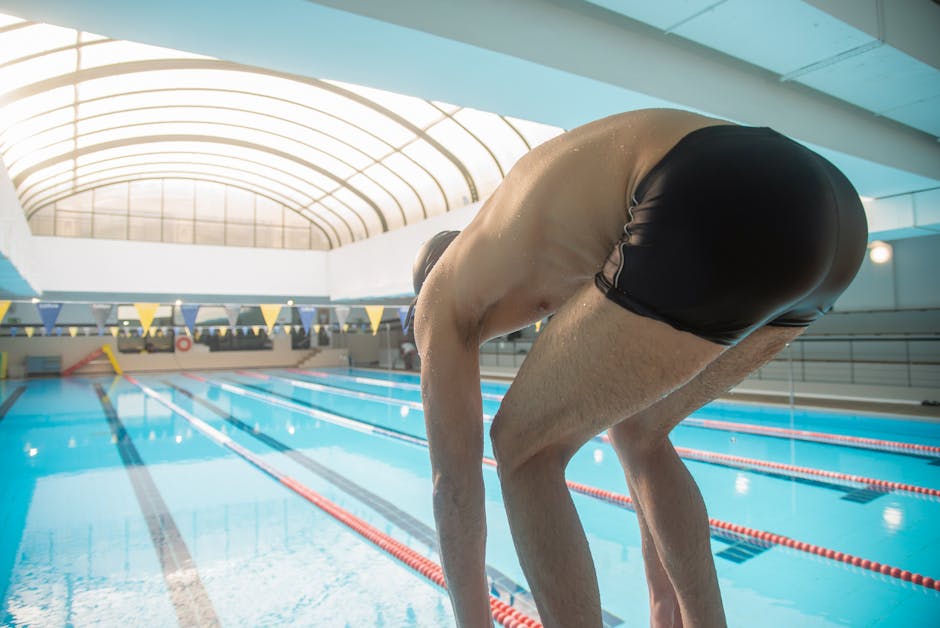
This deserves more explanation than most product pages give it. The inseam length in a hybrid short determines almost everything about how it performs across different activities — and the 7-inch dimension isn’t arbitrary. Multiple brands landed here independently because it solves three problems simultaneously.
5-inch shorts are excellent for running. The Nike Dri-FIT 5″ Challenger is genuinely one of the best pure running shorts available. But at that length, the hem sits high on the thigh — which reads as disproportionate at the pool on most builds — and the reduced fabric coverage can cause a hip-flexor pinch under load in heavier compound movements. 9-inch shorts are comfortable in casual settings, but they drag in water and bunch against the back of the knee during full range-of-motion squats and lunges.
7 inches clears the back of the knee during a deep squat, stays close to the thigh in the water without creating drag, and looks proportional across a wide range of heights and builds from roughly 5’7″ to 6’2″.
Range of Motion in Compound Movements
At 7 inches, the hem clears the back of the knee during a full squat to parallel and below it. In a lunge, the trailing leg’s hem doesn’t catch or drag. For Romanian deadlifts, the front panel lies flat against the quads without creating a pinch at the hip crease when you hinge forward.
I wore the same training session — 5×5 back squats, Romanian deadlifts, box jumps — in three different inseam lengths across three consecutive days. The 7-inch version required zero fabric adjustment between sets. The 9-inch required repositioning after almost every squat set. That constant micro-interruption sounds minor until you’re three weeks into a program and notice how much mental bandwidth it burns.
Pool and Open Water Performance at This Length
During freestyle swimming, 7-inch shorts create measurably less drag than 18″ board shorts. This isn’t competitive swimming — the difference won’t show on a race clock — but for a pool workout or casual open water swim, the drag reduction is real. The shorts don’t balloon upward when you push off the wall or dive in. They sit flat against the thigh and move with the kick cycle rather than resisting it.
For beach use, the length hits a reasonable social proportion. Not short enough to attract comments, not long enough to look like you raided a 2003 closet.
The Zipper Pocket as a Functional Feature
Most swim trunks use velcro pockets or open mesh pockets. Velcro loses grip reliability after repeated wet-dry cycles — I’ve had three separate board shorts develop velcro that barely holds after a season of pool use. A zipper pocket secures a locker token, a folded bill, or a room key without depending on fabric tension. Small detail, noticeable the first time you lose your locker key in the deep end.
Liner Types in Hybrid Shorts: A Direct Comparison
Product descriptions in this category lean on adjectives. Here’s the actual functional difference between the four liner constructions you’ll encounter at the 7-inch inseam length:
| Liner Type | Best Activity | Dry Time (70°F) | Pool Comfort | Running Comfort | Example Product | Price |
|---|---|---|---|---|---|---|
| Mesh Liner | Swim-to-gym hybrid | 15–25 min | Excellent | Good | 7 Inch Men Swim Trunks Gym Shorts | $14.99 |
| Compression Liner | Running, HIIT | 35–50 min | Poor | Excellent | Under Armour Launch Run 7″ | $35 |
| No Liner | Casual beach or pool | 10–15 min | Good | Poor | Patagonia Baggies 5″ | $59 |
| Brief Liner | Lap swimming, triathlon | 20–30 min | Excellent | Moderate | Speedo Eco Endurance+ Volley | $40 |
My pick for hybrid gym-and-pool use is mesh, without hesitation. Compression liners are the right call for dedicated runners — Under Armour’s Launch Run 7″ is the best in that category and worth the $35 if you’re a runner who never touches a pool. But the moment you add swimming to your routine, a compression liner becomes a liability. It holds water, stays damp, and feels cold and heavy on the walk back to the locker room.
Brief liners — as used in the Speedo Eco Endurance+ Volley ($40) — are excellent for lap swimming specifically. For gym use, the brief cut restricts hip flexion in ways the mesh liner doesn’t. Pick brief liners only if the pool is your primary training environment.
How Quick-Dry Polyester Actually Works

The Physics Behind the Fabric
Quick-dry polyester isn’t a coating or a chemical treatment — it’s a weave architecture. Standard cotton holds roughly 27 times its own weight in water and releases it slowly through the bulk of the fabric. Quick-dry polyester uses a micro-channeled weave structure that spreads water across a larger surface area while holding less of it per thread.
More surface area exposed to air equals faster evaporation. The quick-dry polyester in the 7 Inch Men Swim Trunks Gym Shorts uses a lightweight, thin-woven 100% polyester construction that moves water away from the skin and to the outer surface where it evaporates. This is why fabric weight matters: a lighter fabric dries faster than a heavier one, even if both carry the same quick-dry label.
When the Quick-Dry Label Is Misleading
Two scenarios neutralize quick-dry performance entirely. High humidity is the first. Evaporation depends on the surrounding air having capacity to absorb moisture — in a 90% humidity environment like a tropical beach or a poorly ventilated indoor pool deck, dry time doubles regardless of fabric construction. Dense weave is the second problem. Some shorts marketed as quick-dry use heavier polyester that dries in 40+ minutes under ideal conditions.
Shorts that actually dry fast feel thin in your hand. Noticeably lighter than the Patagonia Baggies. That weight difference — not the marketing language — is what determines dry in 20 minutes or 40.
Does the Zipper Pocket Trap Water?
Slightly, yes. Any pocket with layered seams holds a small water reservoir. The design matters here: a pocket where the zipper sits at the top of the opening allows water to drain with gravity when you stand up. Leaving the zipper open post-swim speeds drainage further. In practice, the pocket on the 7-inch shorts I’ve been using has never extended my overall dry time in any way I could measure. It’s a non-issue with normal use.
How to Size Hybrid Swim and Gym Shorts Correctly
Hybrid shorts size differently than standard gym shorts, and the mismatch catches people off guard. Here’s what actually matters:
- Measure your waist, not your usual size label. Swim trunk sizing runs slightly larger than dedicated gym short sizing. The 7 Inch Men Swim Trunks Gym Shorts Medium covers a 30–34″ waist. If you’re a medium in Nike running shorts, that’s typically the right match — but check the listed waist range rather than defaulting to the letter size.
- Test the drawstring before trusting it. Cheap drawstrings slip under lateral movement. A flat braid drawstring with a reinforced toggle is what you want. Pull it firm, then do five jumping jacks. If it loosens, the short wasn’t designed for real training intensity.
- Do a deep squat test before buying in-store. At 7 inches, the hem should clear the back of the knee with a small gap when you’re at parallel. If it bunches against the knee at all, size up or try a different cut — some brands run shorter despite the same labeled inseam.
- Check liner fit independently from the outer shell. The mesh liner should feel snug without compressing. Too loose and it moves during runs, creating friction. Too tight and it restricts hip flexion under load. They should function as two distinct but complementary layers.
- Wet opacity matters for lighter colorways. Solid colors with consistent dye saturation — like the Solid Green colorway in the 7 Inch Men Swim Trunks — hold their opacity significantly better when saturated than washes, fades, or uneven patterns. If you’re buying a light solid color, it’s worth getting wet before committing to it.
The $15 vs. $35+ Gap: What You’re Actually Paying For

At $14.99, the 7 Inch Men Swim Trunks Gym Shorts don’t match the stitching quality of the Nike Dri-FIT Challenger ($35) or the fabric finish of Under Armour’s Launch Run ($35). The waistband will show wear faster. The mesh liner has less anti-chafe treatment at the seams. These are real differences.
They’re just not $20 worth of difference for most use cases. If you’re a daily runner logging 30+ miles a week, the Under Armour compression liner short is a better long-term investment. If you want one short that swims, lifts, and runs without demanding separate items for each, buying two pairs of the $15 option gives you equivalent rotation coverage with five dollars left over.
That’s the resolution to the three-pair rotation I started with — board shorts for the beach, compression shorts for the gym, running shorts for the track, none of them doing more than one job cleanly. One 7-inch hybrid with a mesh liner and a zipper pocket replaced all three. The gym bag is lighter, the laundry math is simpler, and the logic, once you see it, is hard to argue with.