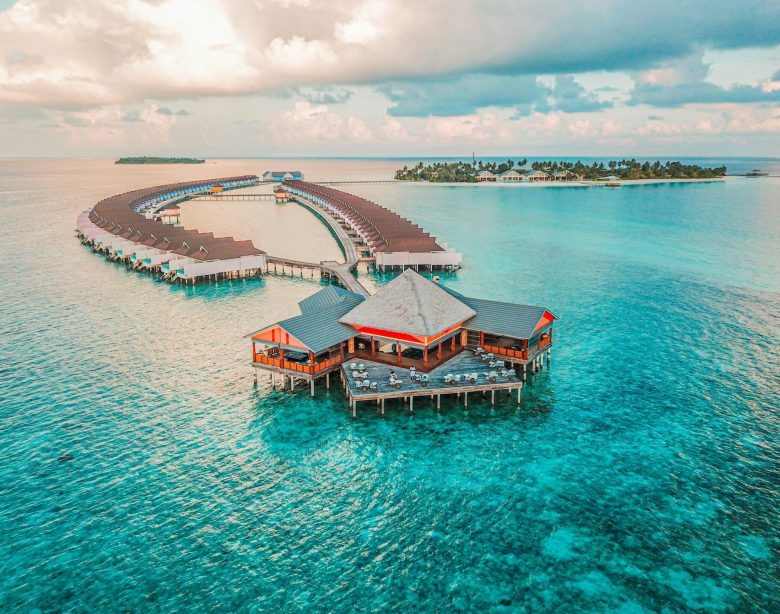
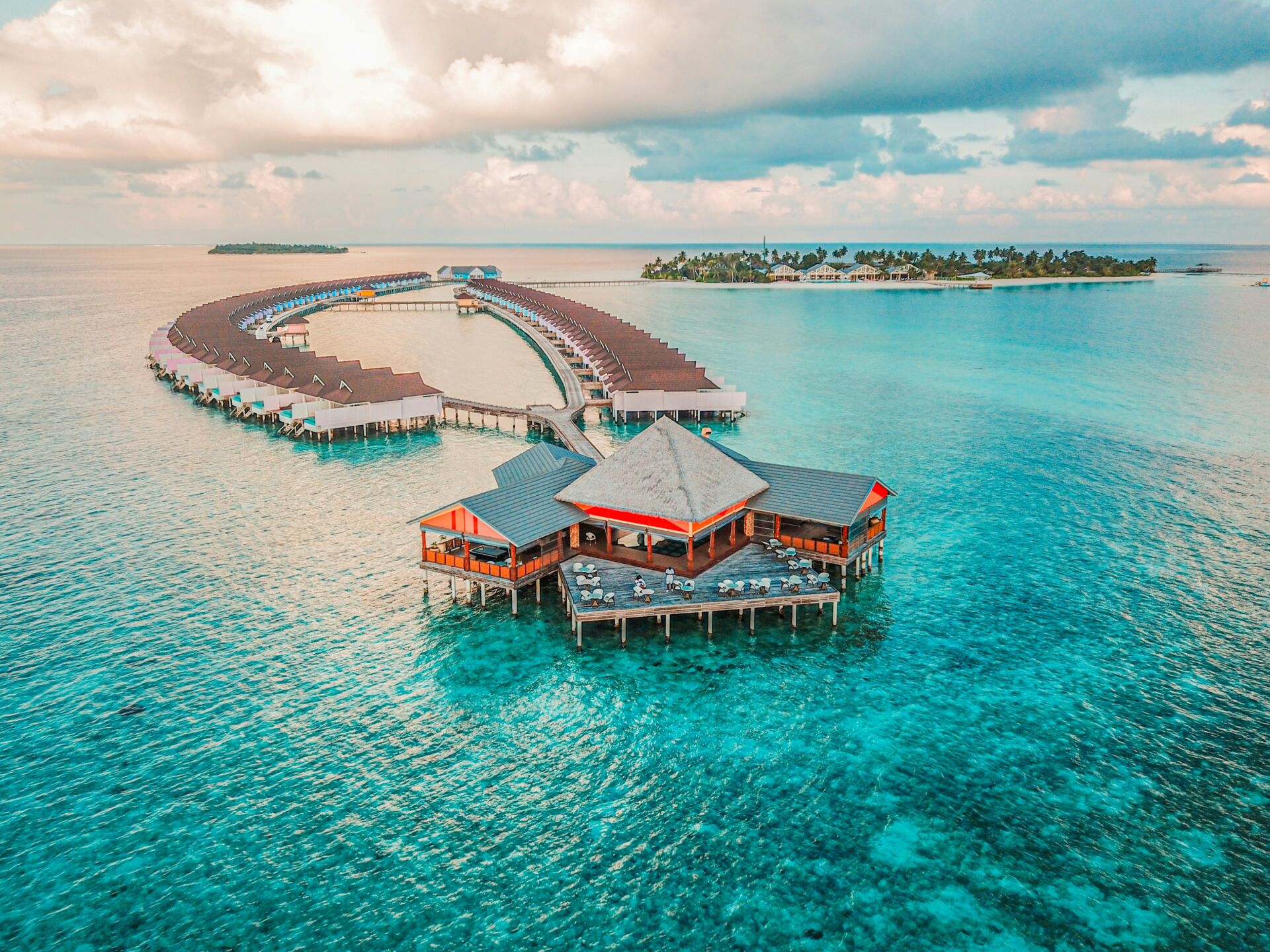
Are you spending hours comparing resorts that all look identical in photos? The Maldives has over 160 resort islands, and the marketing is almost universally the same: turquoise water, overwater villas, white sand. The actual experience varies enormously.
Getting this choice right comes down to four factors most guides skip: how long the transfer takes, whether the lagoon actually works for swimming, what the all-inclusive rate genuinely covers, and — especially relevant for wellness-focused travelers — how serious the spa program is. Get those four right, and the villa type becomes almost secondary.
Overwater Villa vs. Beach Villa: What the Photos Don’t Tell You
This is the decision most travelers agonize over longest. It’s also rarely the one that determines whether the trip succeeds or disappoints. The lagoon clarity, the house reef quality, and the resort’s staff-to-guest ratio matter more than whether your floor has a glass panel in it.
The honest downsides of overwater bungalows
Overwater villas are genuinely spectacular — but they come with tradeoffs the brochures leave out.
They sit above open water, which means you hear the ocean at all times. Wind, waves, and nearby villa noise travel further over water than over land. At busy resorts where villas are spaced 20 to 30 meters apart, you will hear your neighbors. Privacy depends entirely on the resort layout, not just the villa type.
The price premium is real. At Soneva Jani (North Malé Atoll), a Water Retreat villa starts around $4,000 per night. A beach villa at Amilla Maldives — a comparable luxury property — starts closer to $1,100 per night. You are paying roughly three times more for the over-water positioning, and many travelers find the experience does not justify that gap once they are actually there.
The water directly below overwater villas is not always swimmable. Some resorts position them over shallow rocky areas or zones with boat traffic. At Gili Lankanfushi (North Malé Atoll, from approximately $1,800 per night), the lagoon below overwater villas is genuinely swimmable and clear blue. At cheaper resorts, the water underneath is murky or too shallow. Check guest reviews specifically mentioning water clarity below the villas before you book.
Why beach villas are consistently underrated
Beach villas give you direct sand access, often a larger total footprint, and better value per square foot. For snorkeling they win outright — you walk from your terrace to the water, gear up on the beach, and enter at whatever depth you want. No ladder, no stairs.
At Kandima Maldives (Dhaalu Atoll, from approximately $350 per night), a beach studio delivers the full Maldivian experience — white sand, turquoise water, a functioning house reef — without paying the overwater premium. For travelers maintaining a skincare routine, beach villas tend to offer better outdoor shower access and more shade structures, both relevant when you are rinsing off saltwater and sunscreen multiple times a day in direct equatorial sun.
How the atoll location shapes your entire experience
North Malé Atoll resorts — W Maldives, Niyama Private Islands, Gili Lankanfushi — are accessible by speedboat in 20 to 45 minutes from the airport. Convenient. But these are also the most visited atolls, meaning more boat traffic, more day-trippers, and in some areas, more reef degradation.
Atolls further south — Laamu, Addu, Huvadhoo — require a 30 to 45 minute domestic flight plus a boat transfer. That adds 2 to 4 hours to your arrival day. What you get in return: quieter reefs, better coral health, and a genuine sense of remoteness. Six Senses Laamu (Laamu Atoll, from approximately $1,200 per night) is consistently rated for having one of the best house reefs in the Maldives, specifically because of its southern location and lower visitor density.
What Each Maldives Price Tier Actually Delivers
Here is an honest breakdown of what changes as prices increase — not the aspirational version, the practical one.
| Price Tier (per night) | Resort Example | Transfer Type | Meals Included | Spa Quality | Snorkeling |
|---|---|---|---|---|---|
| $150–$350 | Cinnamon Hakuraa Huraa | Speedboat (35 min) | All-inclusive | Basic | Moderate |
| $350–$700 | Kandima Maldives | Seaplane or speedboat | Bed & breakfast or half board | Good | Good |
| $700–$1,500 | Heritance Aarah | Seaplane (25 min) | All-inclusive | Strong | Very good |
| $1,500–$3,000 | Gili Lankanfushi | Speedboat (25 min) | Breakfast + à la carte | Premium | Excellent |
| $3,000+ | Soneva Jani / Velaa Private Island | Seaplane or private transfer | À la carte | World-class | Excellent |
What the table does not show: at the $150 to $350 tier, all-inclusive typically means set menus, limited drink selections, and activities that feel managed rather than open-ended. At $700 and above, the staff-to-guest ratio improves noticeably. You are paying for genuine attention, not just nicer furniture.
The sharpest value jump is between $350 and $700. Kandima offers a 2km-long island, eight dining venues, a full dive school, and a solid spa program at a price point where most competitors cut visible corners. If your budget has a ceiling, stretch toward this tier.
Transfer Distance Will Make or Break Your Trip
Settle the transfer question before you pick your villa type. A seaplane to a remote atoll costs $400 to $600 per person each way, runs on fixed schedules that will not accommodate delayed international flights, and adds four to five hours to your arrival day. If you have fewer than seven nights or a complicated routing, a North Malé Atoll resort with a 30-minute speedboat transfer is the smarter call. The water is still spectacular. You just do not lose a full day getting to it.
Spa and Skincare Quality at Maldives Resorts: What to Actually Expect
For beauty-focused travelers, the spa matters as much as the room. Maldives spas range from a single-room massage hut to multi-building wellness complexes with genuinely distinct treatment philosophies. The gap between those two extremes is wider than price alone suggests.
Do top resorts use professional skincare brands in treatments?
The best ones do — and they name them. Six Senses Laamu uses its own proprietary Six Senses skincare line across all treatments, with an emphasis on organic and sustainably sourced ingredients. COMO Cocoa Island (South Malé Atoll, from approximately $1,800 per night) runs its treatments through COMO Shambhala, a dedicated wellness brand with a coherent philosophy that goes well beyond a standard massage menu. Soneva Jani’s spa uses VOYA seaweed-based products sourced from Irish coastal waters — unusual and genuinely effective.
Mid-range resorts are inconsistent. Kandima’s spa is functional and clean, but product transparency is limited. If you care specifically about what goes on your skin during treatments, check the resort’s online spa menu before booking. Good spas name their products. Vague ones do not.
What does the Maldivian climate actually do to your skin?
The UV index sits at 11 or 12 for most of the year. You are four degrees above the equator. Unprotected skin burns in under 15 minutes. That is not alarmism — it is geography.
Humidity averages around 80%, which sounds skin-friendly but demands lighter product textures. Rich creams and oil-heavy serums feel suffocating and can trigger breakouts in this environment. Lightweight, water-based SPF formulas work far better. The EltaMD UV Pure SPF 47 (approximately $38) and the La Roche-Posay Anthelios Invisible Fluid SPF 50+ (approximately $30) are both built for high-humidity conditions — they sit light, do not pill under heat, and do not clog pores the way heavier mineral formulas can.
Saltwater is dehydrating. Most people do not realize how much ocean time accumulates over a week until their skin starts feeling tight and rough by day three. Applying a simple hyaluronic acid layer immediately after rinsing off — the Neutrogena Hydro Boost Water Gel at around $20 is the obvious price-to-performance pick — while skin is still slightly damp makes a measurable difference.
Should you bring sunscreen or buy it at the resort?
Bring your own. Resort retail markup on sunscreen is significant — expect to pay $45 to $70 for products that cost $15 to $25 at home. More importantly, multiple Maldives resorts now require or strongly encourage reef-safe sunscreen: products free of oxybenzone and octinoxate, both of which damage coral DNA on contact. The Reef Repair SPF 50 Mineral Sunscreen (approximately $22) and Stream2Sea SPF 35 Mineral Sunscreen (approximately $18) are both verified reef-safe mineral formulas that hold up in tropical water. Pack both if you plan extended ocean time.
Five Booking Mistakes That Cost First-Time Visitors the Most
- Assuming all-inclusive means everything is free. At many Maldives resorts, all-inclusive excludes spa treatments, premium spirits, motorized water sports, and sometimes non-buffet dining. At Cinnamon Hakuraa Huraa, the package covers meals and non-motorized activities — the spa is fully à la carte. Read the inclusion list in detail before you book.
- Choosing a resort based on Instagram presence instead of the house reef. The house reef is the coral system surrounding the island — it determines your snorkeling quality far more than villa design. Resorts with degraded reefs from bleaching events or heavy boat traffic offer a poor in-water experience regardless of the overwater villa photos. Ask the resort directly about reef health before committing.
- Ignoring the monsoon calendar. November to April is dry season — calm seas, clear visibility, consistent weather. May through October brings the wet season: frequent rain, rougher transfers, and reduced underwater visibility. Rates drop in the wet season, but excursions get canceled more often and seaplane conditions become unpredictable. Know which season your dates fall in.
- Forgetting to add up transfer costs before comparing resorts. Seaplane transfers are often not included in the resort nightly rate. A round-trip seaplane to a remote atoll adds $800 to $1,200 per person on top of the room cost. Compare all-in prices, not just the nightly rate shown on booking sites.
- Skipping travel insurance on a complex itinerary. Multi-leg travel to remote atolls means delayed international flights can cascade into missed seaplane connections and unplanned nights in Malé. Weather disruptions are real. This is one of the destinations where insurance earns its cost.
Which Resorts Deliver Real Value at Each Budget Level
The clearest mid-range pick in the Maldives is Kandima Maldives, and at the luxury tier, Six Senses Laamu is the standout choice for anyone who cares about marine life, wellness, or genuine skin treatments. Those are the two picks. Here is why they earn them.
Kandima (from approximately $350 per night) offers a 2km island, eight dining options, a full dive school, and a functional spa at a price where most competitors trim the experience. It lacks the intimate seclusion of smaller luxury islands, but the experience is consistently delivered without hidden costs. The house reef is healthy and accessible from the beach.
Six Senses Laamu earns its $1,200-per-night starting rate through the spa program and the reef specifically. The wellness offering — sleep therapy, organic skincare treatments, guided snorkeling with a marine biologist — is built around a coherent health philosophy, not assembled from generic menu options. The house reef is rated among the best in the country for coral diversity and fish density, a direct result of the remote location and low visitor volume.
At the ultra-luxury level, Velaa Private Island (Noonu Atoll, from approximately $4,000 per night) and Soneva Jani both deliver at their price points. Soneva Jani suits families and guests who want high activity variety. Velaa is designed for couples and has an exceptional restaurant program and a private wine cellar — relevant if dining quality matters as much as the ocean does to you.
At the entry level, Club Med Kani (North Malé Atoll, from approximately $200 per night) is the most reliably honest budget option. It is organized, social, and genuinely all-inclusive in a way most budget resorts are not. Expect activity, not solitude. Expect good food, not fine dining. It delivers exactly what it promises.
Whatever your budget: confirm the round-trip transfer cost before comparing anything else — that single number changes the entire value calculation for every resort on your list.