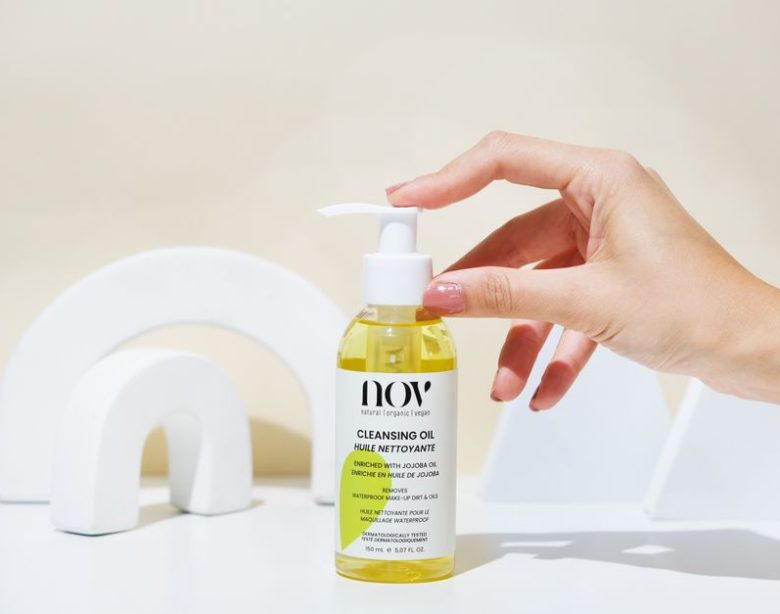
Dry and sensitive skin sounds like a simple combination until you start shopping for it. Most products labeled “gentle” are formulated for oily or normal skin that happens to react occasionally — not for skin that genuinely lacks oil and flares from a single fragrance compound.
Why Dry and Sensitive Together Is Harder to Shop For Than Either Type Alone
These two skin issues have different root causes. Products that fix one often make the other worse — and understanding that conflict is the only way to stop wasting money on things that don’t work.
The Two Problems Are Pulling in Opposite Directions
Dry skin is a lipid deficiency. Your sebaceous glands don’t produce enough oil, or your environment strips it faster than your skin replaces it. The fix is rich, occlusive ingredients — ceramides, squalane, shea butter, mineral oil — that physically seal moisture in.
Sensitive skin is a reactivity problem. Your skin’s immune response triggers too easily. Redness spreads. Itching starts. The fix is a stripped-down formula: as few ingredients as possible, nothing that mimics an allergen.
Here’s the conflict. Rich, occlusive moisturizers often contain fragrance to mask the smell of their fatty base. Some ceramide creams use preservatives like phenoxyethanol that sensitize reactive skin over time. Fatty alcohols like cetearyl alcohol — a common emollient in dry-skin products — cause contact dermatitis in a real subset of people.
What Your Skin Barrier Actually Needs at the Structural Level
A healthy skin barrier is roughly 70% lipids and 30% protein. When both are depleted — the baseline state for dry sensitive skin — two things happen at once.
Water escapes faster than it should. Dermatologists measure this as water loss through the skin surface: healthy skin loses around 7g/m²/hr; a compromised barrier can lose two to three times that. You feel this as tightness after washing, even after applying moisturizer.
Allergens enter more easily. The skin’s tight-junction proteins that act as a second line of defense weaken when the lipid layer is disrupted. This is why dry, sensitive skin seems to react to more things over time — not less. The barrier becomes progressively more permeable without active repair.
The “Gentle” Label Problem
Fragrance-free, hypoallergenic, dermatologist-tested — none of these terms are regulated in the US or UK. A brand can print all three on a bottle that contains benzyl alcohol, citronellol, and synthetic musks. The only reliable method is reading the ingredient list yourself and patch-testing any new product on your inner arm for 72 hours before applying it to your face.
The seven products below were chosen because their formulas are short, their fragrance-free claims are confirmed directly by the companies (not just printed on packaging), and at least some have published clinical data supporting sensitive skin use.
The 7 Products: Full Specs and Who Each One Is For
Side-by-Side Comparison
| Product | Routine Step | Price | Key Ingredients | Best For |
|---|---|---|---|---|
| Bioderma Sensibio H2O Micellar Water | Cleanse | $15 (250ml) | Cucumber extract, PEG-6 caprylic/capric glycerides | Low-irritation makeup and SPF removal |
| Hada Labo Gokujyun Premium Hyaluronic Acid Lotion | Essence/toner | $18 (170ml) | 5 HA types, collagen, PCA | Layered hydration on damp skin |
| The Ordinary Hyaluronic Acid 2% + B5 | Serum | $10 (30ml) | Multi-weight hyaluronic acid, panthenol | Surface-level hydration boost |
| La Roche-Posay Toleriane Double Repair Face Moisturizer | Daytime moisturizer | $22 (75ml) | Ceramide-3, niacinamide 4%, prebiotic thermal water | Daily barrier maintenance, all seasons |
| First Aid Beauty Ultra Repair Cream | Intensive moisturizer | $38 (226g) | Colloidal oatmeal 1%, shea butter, ceramides | Flare recovery, very dry patches |
| Avene Cicalfate+ Restorative Protective Cream | Barrier repair | $30 (40ml) | Sucralfate, zinc oxide, Avene thermal spring water | Broken skin, post-reaction recovery |
| EltaMD UV Clear Broad-Spectrum SPF 46 | Sunscreen | $39 (48g) | Zinc oxide 9%, titanium dioxide 7.5%, niacinamide | Sensitive skin SPF without white cast |
Budget Reality Check
Three products here — Bioderma Sensibio, The Ordinary HA serum, and Hada Labo Gokujyun — cost under $20 combined. They handle cleansing and your entire hydration step for about $43 total. The La Roche-Posay Toleriane Double Repair is the core daily moisturizer and worth the full price. First Aid Beauty Ultra Repair Cream and Avene Cicalfate+ are rescue products, not daily ones. The 226g tub of FAB lasts around six months for most people, and the 40ml Cicalfate+ is only for active flares — so neither eats into your budget the way a daily moisturizer would.
The Mistake That Derails Almost Every Sensitive Skin Routine
Rotating products before they have time to work. Dry, sensitive skin takes 21 to 28 days to show a measurable response to a new product — that’s one full skin-cell turnover cycle. Switching every two weeks because results aren’t visible yet means you never let anything actually work, and your barrier never stabilizes long enough to improve.
How to Layer These Products So They Don’t Cancel Each Other Out
Layering order determines whether ingredients reach the skin or sit on top of each other doing nothing. The rule is thinnest to thickest, with SPF always last in the morning regardless of texture.
Morning Order
- Bioderma Sensibio H2O — one cotton pad sweep to clear overnight buildup. No rinse needed on a clean morning face.
- Hada Labo Gokujyun Premium Lotion — apply immediately to damp skin. Pat in with palms, don’t rub. Three thin layers absorb better than one thick one.
- The Ordinary HA 2% + B5 — two pumps while skin is still slightly damp. Hyaluronic acid needs water present to bind to the surface layer. On completely dry skin in low-humidity air, it pulls moisture upward from deeper layers instead — the opposite of what you want.
- La Roche-Posay Toleriane Double Repair — seal the serum in. Wait 60 seconds before adding SPF.
- EltaMD UV Clear SPF 46 — final step, always. About a quarter teaspoon for face and neck.
Evening Order
- Bioderma Sensibio H2O — full cleanse. Double-pass if you wore waterproof SPF or makeup.
- Hada Labo Gokujyun Premium Lotion — same application as morning.
- Either First Aid Beauty Ultra Repair Cream for general dryness or Avene Cicalfate+ if your skin is actively reacting. Not both in the same session — choose based on what your skin is doing that night.
Ingredient Red Flags Most Sensitive Skin Guides Don’t Mention
Is alcohol in skincare always bad for dry, sensitive skin?
No — but the type matters enormously. Denatured alcohol (listed as SD alcohol, alcohol denat., or just alcohol near the top of an ingredient list) is the problem kind. It strips the lipid layer and should be avoided completely if your skin is both dry and reactive. Fatty alcohols — cetyl alcohol, stearyl alcohol, cetearyl alcohol — are a completely different category. They’re emollients derived from plant fats and are generally helpful for dry skin. A small number of people with contact dermatitis do react to cetearyl alcohol specifically, so if a cream sits high in your reaction history, check whether cetearyl is in the first five ingredients.
Does “fragrance-free” mean the same thing as “unscented”?
No, and this trips up a lot of people. “Unscented” means no detectable odor — but companies achieve that by adding masking fragrances, which are fragrance compounds that neutralize other smells. They’re still fragrance ingredients. “Fragrance-free” means no fragrance compounds were added at all. For dry, sensitive skin, fragrance-free is what you want. Vanicream, EltaMD, La Roche-Posay, The Ordinary, and CeraVe all have verified fragrance-free lines. Many pharmacy products labeled “sensitive” are only unscented — a real difference when your skin reacts to limonene and linalool, which are among the most common fragrance allergens.
Can hyaluronic acid actually make dry skin worse?
Yes, under one specific condition: dry air. HA is a humectant — it draws moisture from wherever water is available. In environments below 40% humidity (heated rooms in winter, airplane cabins), it pulls moisture upward from deeper skin layers if there’s no atmospheric moisture available. The result is skin that feels briefly plump, then even more dehydrated an hour later. The fix: apply HA to damp skin and immediately seal it with an emollient or occlusive moisturizer. The La Roche-Posay Toleriane Double Repair does this automatically because it contains ceramides and niacinamide alongside the HA. Never leave a hyaluronic acid serum as your final step without a moisturizer over it — especially in winter.
How Long to Stay the Course Before Reassessing
Six weeks on a consistent routine is the minimum before concluding something isn’t working. Not six weeks of ideal conditions — six weeks of actual daily use, including the days your skin is reacting to stress or weather.
The clearest signal a routine is working isn’t that your skin feels great on good days. It’s that your baseline has shifted. You wake up and your face isn’t tight. Products absorb evenly instead of sitting on top. You’re reacting to fewer triggers, not more. These changes are slow — week four is often when people first notice them.
If your skin is still actively flaring after six consistent weeks, the cause is more likely systemic — diet, sleep quality, stress load, or medication side effects — than product-related. Another moisturizer won’t fix that. A dermatology appointment will do more.
For the fastest path through this routine: start weeks one and two with just Bioderma, Hada Labo Gokujyun, and the La Roche-Posay Toleriane. Add The Ordinary HA serum in week three. Add EltaMD SPF in week four. Keep First Aid Beauty Ultra Repair and Avene Cicalfate+ on hand for reactive moments only. Building incrementally means you’ll know exactly which product your skin is responding to — and which one is causing problems if something goes wrong.