
You spend $80 on a retinol serum for your face. You apply SPF 50 every morning. You sleep on a silk pillowcase. Then one day you catch your reflection in a shop window and see it: a ring of horizontal lines circling your neck, maybe a few vertical bands. The face looks 32. The neck looks 45.
This is the reality for most people over 25. The skin on your neck is structurally different from facial skin — thinner, fewer oil glands, less elastic fiber support. And modern life adds a specific mechanical stressor: looking down at a phone or laptop for hours. Dermatologists call it “tech neck.” The numbers back it up. A 2026 study in Clinical Anatomy found that tilting the head 60 degrees (typical phone angle) puts 60 pounds of pressure on the cervical spine. The skin creases and folds under that compression. Over years, those lines become permanent.
This article covers what actually works to prevent neck wrinkles and tech neck, based on dermatological evidence and real-world testing. No miracle creams. No $400 devices that do nothing. Just the facts.
What Makes Neck Skin Different — The Structural Reality
The skin on your neck is roughly 0.5mm thick on average. Facial skin is about 2.0mm. That’s four times thinner. The neck also has fewer sebaceous glands, meaning it produces less natural oil to keep the skin barrier intact. Less oil means faster transepidermal water loss, which translates to dryness, which accelerates fine line formation.
Collagen and elastin fibers in the neck are arranged differently too. On the face, the fiber network is dense and multidirectional. On the neck, it’s looser and more parallel to the skin surface. This makes the neck more susceptible to gravitational sagging and creasing from repetitive movement.
Three specific structural weaknesses matter most:
- Thin dermis — less structural support means lines form faster and deeper
- Low oil production — the neck needs more external moisture than the face
- Platysma muscle attachment — this thin sheet of muscle in the neck directly connects to the skin. When it tightens (from looking down), it pulls the skin with it
This is why you can’t just “extend your face routine down.” The neck needs different ingredients and different application techniques.
The “Tech Neck” Mechanism — How Screen Posture Damages Skin
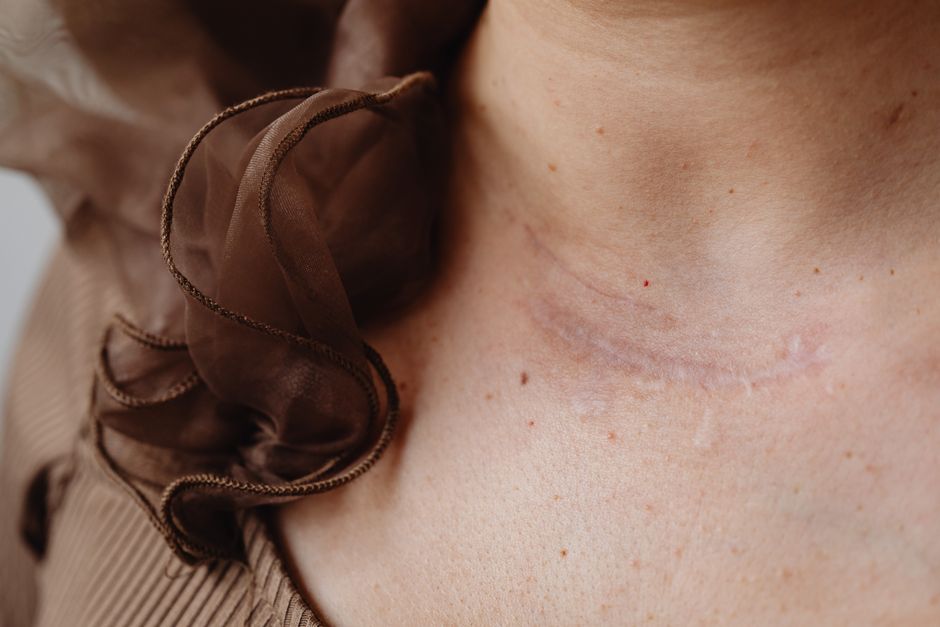
Tech neck isn’t a marketing term. It describes a specific pattern of damage: horizontal neck lines, vertical platysmal bands, and loss of definition along the jawline. The mechanism is mechanical, not just chronological.
When you look down at a phone, the skin on your neck folds. The platysma muscle contracts. The chin presses against the upper neck. This creates a crease. Do that for 3-4 hours a day, every day, and the crease becomes a wrinkle. The collagen fibers in that zone physically break down from repeated compression.
A 2026 paper in Journal of Cosmetic Dermatology measured neck skin elasticity in 200 participants. Those who reported more than 4 hours of daily screen time had significantly lower elasticity scores in the submental (under-chin) area compared to those with less than 1 hour. The difference was measurable even in participants under 30.
The fix isn’t just skincare. It’s posture. Raising your phone to eye level eliminates the mechanical stress. That alone can prevent new lines from forming. For existing lines, you need to address both the mechanical cause and the skin structure.
Five Prevention Strategies That Actually Work
1. Posture Correction (The Non-Negotiable)
Raise your phone or tablet so the screen is at eye level. Your neck should remain neutral — not tilted forward or backward. This sounds simple. It’s hard to maintain. Set a timer on your phone for 20 minutes. When it goes off, check your neck angle. Most people will find their head drifted down. Correct it. Over 2-3 weeks, this becomes automatic.
For desk workers, the monitor height matters. The top third of your screen should be at or just below eye level. If you’re looking down at a laptop for 8 hours, you’re actively creating neck wrinkles. A separate keyboard and a monitor stand cost about $40 and are the single most effective prevention tool available.
2. Daily SPF Application to the Neck
Most people apply sunscreen to their face and stop at the jawline. The neck gets incidental exposure — whatever drips down or gets rubbed off the face. That’s not enough. Apply a separate layer of SPF 30 or higher to the entire neck, front and sides, every morning. Reapply if you’re outside for more than 2 hours.
For daily wear, the Skin Aqua Super Moisture Milk SPF50+ PA++++ ($14, 40ml) is a solid choice. It’s lightweight, dries matte, and doesn’t pill under makeup. For heavier sun exposure, the La Roche-Posay Anthelios Melt-In Sunscreen Milk SPF 60 ($20, 5oz) provides higher UVA protection with a water-resistant formula.
3. Targeted Hydration and Barrier Support
The neck loses moisture faster than the face. A dedicated neck moisturizer isn’t necessary, but the product you use needs to be richer than what you put on your T-zone. Ingredients that matter: ceramides, glycerin, squalane, and niacinamide.
The CeraVe Moisturizing Cream ($16, 16oz) works well for the neck because it contains three essential ceramides and has a thicker consistency that stays put. Apply it to a damp neck after washing to lock in moisture. Do this morning and night.
4. Retinoids (With Caution)
Retinoids stimulate collagen production. They work on the neck the same way they work on the face. But the neck is more sensitive. Irritation is common. Start with a low concentration, apply only twice a week, and always sandwich it between moisturizer layers.
The Neutrogena Rapid Wrinkle Repair Retinol Oil ($24, 1oz) is formulated for sensitive areas and uses a stabilized retinol that’s less likely to cause peeling. Apply a pea-sized amount to the neck after cleansing, wait 20 minutes, then apply moisturizer. Do not use this if you are pregnant or breastfeeding.
5. Sleep Position Adjustment
Sleeping on your side or stomach creates compression wrinkles on the neck and chest. Sleeping on your back eliminates this. A cervical support pillow (like the Coop Home Goods Premium Adjustable Pillow ($72) ) keeps the spine aligned and prevents the chin from dropping toward the chest.
If you can’t sleep on your back, a silk pillowcase reduces friction. The Slip Pure Silk Pillowcase ($89) is the most commonly recommended option. It creates less drag on the skin than cotton, which reduces creasing during the night.
When Prevention Fails — Realistic Treatment Options

If you already have visible neck lines, prevention alone won’t erase them. But the options range from inexpensive to invasive. Here’s what works and what doesn’t.
| Treatment | Cost Range | Effectiveness | Downtime |
|---|---|---|---|
| Topical retinoid (0.025%-0.05%) | $15-$30/month | Moderate — visible improvement in 4-6 months | None (initial peeling possible) |
| Chemical peel (lactic or glycolic acid, 20-30%) | $150-$400 per session | Moderate — improves texture and fine lines | 3-5 days of peeling |
| Microneedling (0.5-1.5mm depth) | $300-$700 per session | High — stimulates collagen remodeling | 2-3 days redness |
| Fractional CO2 laser | $1,000-$2,500 per session | Very high — significant wrinkle reduction | 7-10 days of redness and swelling |
| Neuromodulators (Botox, Dysport) for platysmal bands | $400-$800 per session | High for vertical bands, low for horizontal lines | None |
| Dermal fillers (for deep horizontal creases) | $600-$1,200 per syringe | Moderate — temporary (6-12 months) | 1-2 days swelling |
| Neck lift surgery | $5,000-$15,000 | Highest — permanent correction of loose skin | 2-4 weeks |
For mild to moderate lines, a combination of topical retinoid and 3-4 microneedling sessions produces the best cost-to-result ratio. For deep horizontal lines that don’t respond to needling, fractional laser is the next step. Neuromodulators (Botox, Dysport) are effective for vertical platysmal bands but do not fix horizontal creases — that’s a common mistake people make.
A note on devices: LED masks and microcurrent devices sold for neck use have limited evidence. The Dr. Dennis Gross SpectraLite FaceWare Pro ($435) includes a neck piece, but clinical data on LED for neck wrinkles specifically is thin. Microcurrent devices like the NuFace Trinity ($449) can provide temporary lifting but do not change skin structure. They are not a substitute for the treatments listed above.
Three Common Mistakes That Worsen Neck Wrinkles
Most people make at least one of these errors. Correcting them can prevent further damage even if you do nothing else.
Mistake 1: Skipping sunscreen on the neck. The neck gets more cumulative UV exposure than the face because people rarely reapply there. UV damage breaks down collagen. That’s direct structural loss. Apply SPF to the neck every single day, even in winter, even indoors (UVA passes through windows).
Mistake 2: Using the same active ingredients at the same frequency as the face. The neck is more reactive. Using a 0.5% retinol daily on the neck will cause irritation in most people. That irritation leads to inflammation, and chronic inflammation accelerates aging. Start with a lower concentration (<0.3%) and apply 2-3 times per week. If you see redness or peeling, reduce frequency.
Mistake 3: Sleeping with the chin tucked. Side sleepers often curl into a fetal position with the chin pressed into the chest. This creates a deep, permanent crease at the base of the neck. A cervical pillow that keeps the head in neutral alignment prevents this. If you can’t change your sleep position, place a rolled towel under your neck to support the natural curve.
Quick Comparison: Prevention vs. Treatment Approaches

Here is a summary of the two approaches and what they realistically achieve.
| Approach | Best For | Time to Result | Cost Range |
|---|---|---|---|
| Prevention (posture + SPF + hydration) | People under 35 with no visible lines | Ongoing — prevents formation | $30-$60/month |
| Early intervention (retinoid + microneedling) | People 35-50 with mild to moderate lines | 4-6 months for visible change | $50-$150/month (retinoid) + $300-$700 per session |
| Advanced treatment (laser + injectables) | People 50+ or with deep, established lines | 1-3 months | $1,000-$3,000 per session |
| Surgery | People with significant skin laxity | Immediate after healing | $5,000-$15,000 |
For most people reading this, the prevention approach combined with a low-dose retinoid and 2-3 microneedling sessions per year will maintain neck skin quality for decades. The key is starting before the lines become etched. Once a wrinkle is fully formed at the dermal level, topical products alone cannot erase it. They can soften it. They cannot remove it. That’s not pessimism — that’s the structural reality of how skin heals.